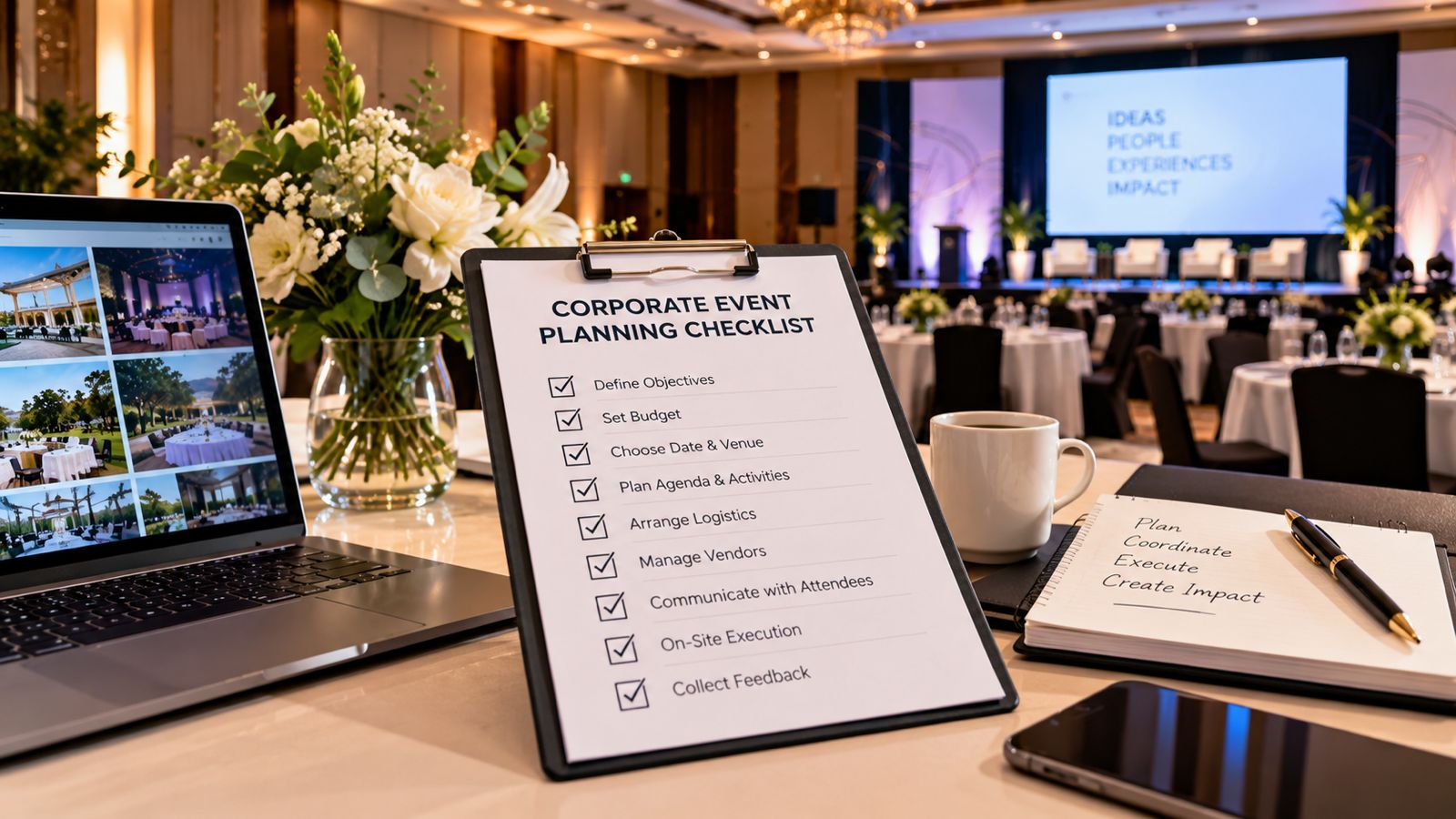
A great corporate event looks effortless on the day. Behind it, though, are dozens of decisions, deadlines, and details that all need to come together at the right time. Miss one, and it shows.
Whether you're planning a conference, an annual day, a product launch, or an award night, this corporate event planning checklist walks you through every stage, from the first idea to the follow-up after the last guest leaves. Use it as your roadmap, and you'll always know what to do next.
Before You Start: Define the Basics
Every successful event starts with clear answers to five questions. Get these right, and every later decision becomes easier.
- Purpose: Why are you hosting this event? To launch, celebrate, train, reward, or connect?
- Audience: Who is attending? Employees, clients, dealers, investors, or the public?
- Format: Conference, offsite, gala dinner, launch, workshop, or a mix?
- Budget: What is the total budget, and who approves spending?
- Success measure: How will you know the event worked? Leads, feedback, attendance, or media coverage?
3 to 6 Months Before the Event
This is the planning foundation. Larger events, and events in peak season, need the longer lead time.
- Finalize the event goal, format, and budget
- Choose a tentative date, and check it against holidays, festivals, and business calendars
- Shortlist the city and venue options
- Visit shortlisted venues and confirm availability
- Book the venue and sign the agreement
- Block hotel rooms for outstation guests
- Appoint an internal event owner or an event management partner
- Decide on the theme and overall look of the event
- Identify keynote speakers, chief guests, or performers and send invitations
Pro tip: In cities like Mysuru (Mysore) and Bengaluru (Bangalore), October to February is peak season. Book venues as early as possible for events in these months.
2 to 3 Months Before
Now the event starts taking shape.
- Finalize the event agenda and run of show
- Confirm speakers, guests of honour, and entertainment
- Book key vendors: décor, stage, sound, lighting, LED screens, and AV
- Finalize catering and menu tasting
- Plan branding: backdrops, standees, signage, and stage design
- Arrange photography and videography
- Set up registration, whether online forms, RSVPs, or an event app
- Send save-the-dates to guests
1 Month Before
This is when details and confirmations matter most.
- Send formal invitations and track RSVPs
- Finalize the guest list and seating plan
- Book transport for guests, speakers, and VIPs
- Order gifts, mementos, trophies, or delegate kits
- Confirm all vendor contracts, timelines, and payments
- Prepare presentations, videos, and stage content
- Write the anchor or emcee script
- Check permissions and licenses where needed, such as for music, outdoor events, or service of alcohol
2 Weeks Before
- Share the final agenda with speakers, guests, and your team
- Brief all vendors on setup times and contact persons
- Finalize the floor plan, stage layout, and seating
- Confirm catering numbers and special dietary needs
- Print badges, signage, and printed materials
- Plan a backup for key risks, such as weather, power, or a speaker cancellation
1 Week Before
- Send reminder messages to all guests
- Share travel, venue directions, and contact details
- Hold a full team briefing and assign responsibilities
- Prepare an emergency contact list for vendors and the venue
- Reconfirm transport, hotel bookings, and VIP arrivals
The Day Before
- Complete venue setup: stage, décor, branding, and seating
- Run a full technical rehearsal, testing sound, lights, screens, and presentations
- Rehearse with the anchor and key speakers
- Set up the registration desk and check-in process
- Walk through the venue as a guest would, from parking to the exit
On the Event Day
- Arrive early and do a final check of every area
- Keep the run of show and contact list with every team member
- Assign people to manage VIPs, the stage, guests, and vendors
- Stay in touch with the team over phones or walkie-talkies
- Capture photos, videos, and guest moments throughout
- Handle surprises calmly, which is where good planning pays off
After the Event
The event isn't over when the guests leave. Follow-up turns a good event into lasting value.
- Send thank-you messages to guests, speakers, and sponsors
- Share photos, videos, and highlights on social media and internally
- Collect feedback through a short survey
- Settle all vendor payments
- Review results against your original goals
- Note what worked and what to improve for next time
Common Corporate Event Mistakes to Avoid
- Booking the venue too late. Popular venues fill up months ahead, especially in peak season.
- Skipping the technical rehearsal. Most event-day problems come from sound, screens, or presentations that weren't tested.
- Overloading the agenda. Too many sessions tire guests out. Leave time for breaks and networking.
- No backup plan. Rain, power cuts, and late speakers happen. Plan for them in advance.
- Forgetting the follow-up. Feedback and thank-yous are what guests remember next time you invite them.